

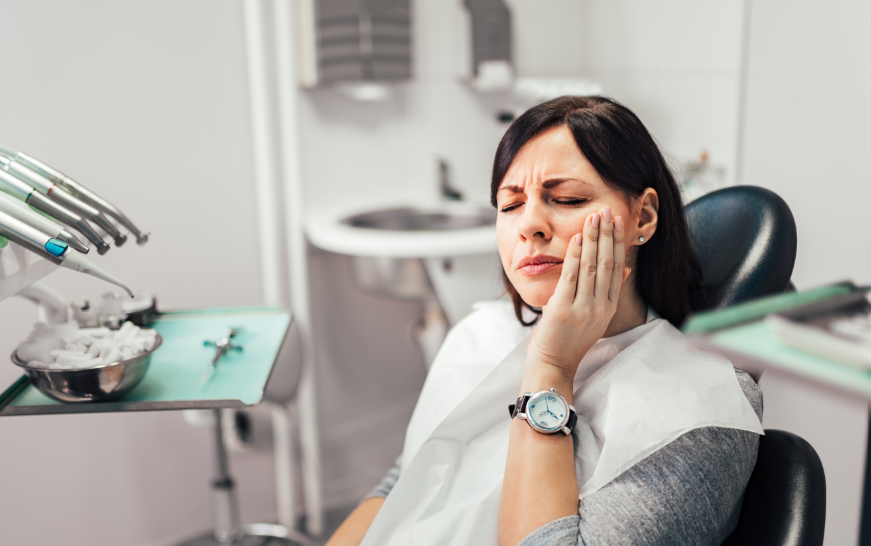
Have you ever tried to yawn, take a bite of your favorite food, or open your mouth to speak, only to find that your jaw feels tight or won’t move properly? A stiff or locked jaw can be uncomfortable, frustrating, and sometimes downright painful. While occasional jaw tension may resolve on its own, persistent stiffness or difficulty opening and closing your mouth could indicate an underlying problem.
Understanding what causes jaw locking, what you can do at home, and when to seek professional care can help you find relief and protect your long-term oral health.
What Causes a Stiff or Locked Jaw?
There are several possible explanations for jaw stiffness, ranging from temporary muscle tension to issues involving the temporomandibular joints (TMJs). These joints connect your lower jaw to your skull and allow you to speak, chew, and open and close your mouth.
Some common causes of jaw stiffness include:
- TMJ disorders (TMD): Problems involving the jaw joints or surrounding muscles can cause pain, stiffness, clicking, and difficulty moving your jaw.
- Teeth grinding and clenching: Frequently clenching your jaw or grinding your teeth can strain the muscles responsible for jaw movement.
- Stress: Emotional stress can contribute to unconscious jaw clenching, resulting in muscle tension and soreness.
- Arthritis: Inflammation and degeneration within the jaw joints can interfere with comfortable movement.
- Injury: Trauma to your face or jaw can damage surrounding tissues and make it difficult to open or close your mouth.
In some cases, jaw locking happens when the cartilage disc inside the TMJ becomes displaced, interfering with the joint’s normal movement.
What Can You Do at Home to Relieve Jaw Stiffness?
If your symptoms are mild and you’re still able to move your jaw, a few simple home remedies may help reduce discomfort.
Consider trying the following:
- Apply a warm compress: Gentle heat can help relax tight jaw muscles and improve comfort.
- Try a cold compress: If you’re experiencing swelling or inflammation, applying a cold pack wrapped in a towel may provide relief.
- Eat softer foods: Temporarily avoid chewy, crunchy, or tough foods that require excessive jaw movement.
- Avoid excessive jaw movement: Skip chewing gum and try not to open your mouth unusually wide when yawning or eating.
- Practice relaxation: Stress management techniques, such as deep breathing, may help reduce unconscious clenching.
Avoid forcing your jaw open or attempting to manipulate a locked joint yourself. If your symptoms persist or worsen, seek professional evaluation rather than relying on home remedies alone.
When Should You See a Dentist or Doctor?
Occasional jaw tension may not be cause for concern, but persistent stiffness, recurring locking, or painful jaw movement deserves professional attention.
Schedule an evaluation if you experience:
- Difficulty opening your mouth fully.
- Jaw pain when chewing or speaking.
- Frequent clicking or popping accompanied by discomfort.
- A jaw that repeatedly gets stuck in an open or closed position.
- Headaches, facial soreness, or ear discomfort associated with jaw movement.
If your jaw suddenly becomes locked and you cannot open or close your mouth normally, seek prompt medical or dental attention. If the problem follows an injury, or you experience difficulty breathing or swallowing, seek emergency medical care.
A dentist or physician can evaluate your symptoms, identify potential causes, and recommend appropriate treatment. Depending on the diagnosis, options may include physical therapy, a custom oral appliance, medication, or other TMJ-directed treatments.
Find Relief From Jaw Pain and Stiffness
You shouldn’t have to struggle through everyday activities because your jaw feels tight or uncomfortable. Whether you’re experiencing occasional tension or more persistent locking, identifying the underlying cause is an important first step toward relief.
With the right evaluation and treatment, you can work toward more comfortable jaw movement and better long-term oral health.
About the Practice
Dentistry in Millersville provides comprehensive dental care in Millersville, Maryland, including preventive, restorative, cosmetic, and TMJ/TMD therapy. Led by Dr. David R. Wank, the practice emphasizes personalized treatment and helping patients maintain comfortable, healthy smiles. Through its approach to TMJ care, the team helps patients address jaw discomfort and related symptoms with treatment recommendations tailored to their needs.
Call us at (410) 729-9090 or schedule your appointment online